If the mail has taken over your kitchen table, you can take it back.
You open it. You sort it. You feel like you owe every envelope an answer — and you never quite get to your own day.

Maybe you do this because you're conscientious — you don't like waste, and you don't like ignoring people. Or maybe it's that a letter with your name on it still feels like it deserves an answer, or that you'd hate to miss the one envelope that actually matters. Unfortunately, those are exactly the instincts these mailing companies feed on and exploit. Older adults are deliberately targeted by predatory mail schemes. This isn't just unwanted mail — it's a business built around getting you to keep answering. Answering an unwanted solicitation can mark your name as one that responds — and that information can be sold or shared with other senders. Answering more can bring more mail, even when you're only trying to be considerate.
What it's been costing you
It's costing you more than space on the table.

Piece by piece, it's easy to miss the toll unsolicited mail takes on your life. A single envelope never looks like much — a few minutes, a small check, one more sheet of paper. But over time, those small demands can add up. Here's what to look for.
Your time.
Opening, reading, sorting, deciding — a few minutes per envelope can take up much of a morning. The letter you meant to write or the call you meant to make can end up waiting behind mail you never asked for.
Your money.
Ten or fifteen dollars may not seem like much. Sent repeatedly, those small checks add up. Looking at the total can help you decide how much you want to give — and where you want your money to go.
Our trees.
Envelopes, inserts, catalogs — the paper keeps arriving even when you recycle carefully. Answering unwanted solicitations can bring more. Getting off the lists helps reduce what gets printed and sent in the first place.
Your life.
An invitation put off until the mail is finished. A table too covered to have someone over. If the pile is getting between you and the people or plans you care about, clearing it is about more than making room for lunch.
What they don't tell you
Here's what's actually happening — and the proof.
The FTC, the Department of Justice, and the U.S. Postal Inspection Service explain how deceptive mail works and how to report it. Their sources are linked below so you can check for yourself.
If you hate waste, stop it at the source. Recycling the mail you receive helps, but answering unwanted solicitations can bring even more envelopes, inserts, and catalogs to your door. Getting off the mailing lists means less paper gets printed and sent to you in the first place. You already care about waste. This is how you can prevent it.

A personal-looking letter can be a mass mailing. Your name, the warm greeting, even the address labels can be added automatically. There may be a real organization behind it, but receiving its letter doesn't create a personal obligation to reply.
You weren't foolish. You were conscientious — and an entire industry learned how to turn your good intentions into their income.
Fraud networks call them "sucker lists."
The Department of Justice has documented fraudulent mail operations trading lists of people who previously responded to scams. These so-called "sucker lists" help scammers target the same people again. That term describes the fraudsters' contempt — it says nothing about the worth or intelligence of the people they target.
See for yourself
- Real sweepstakes are free and won by chance. Paying doesn't improve your odds, and a personalized prize notice isn't proof you've won. —"Fake Prize, Sweepstakes, and Lottery Scams," FTC Consumer Advice
- Mass-mailing fraud aimed at older Americans is real and federally prosecuted. DOJ has documented schemes that deliberately targeted older adults. —DOJ mass-mailing fraud fact sheet (PDF)
- The U.S. Postal Inspection Service — the federal law enforcement agency for the mail — investigates exactly this kind of mail and takes reports directly. —"Report Suspicious Mail," USPIS
Why the pile keeps growing
Spot the tactics — so you can catch them next time.
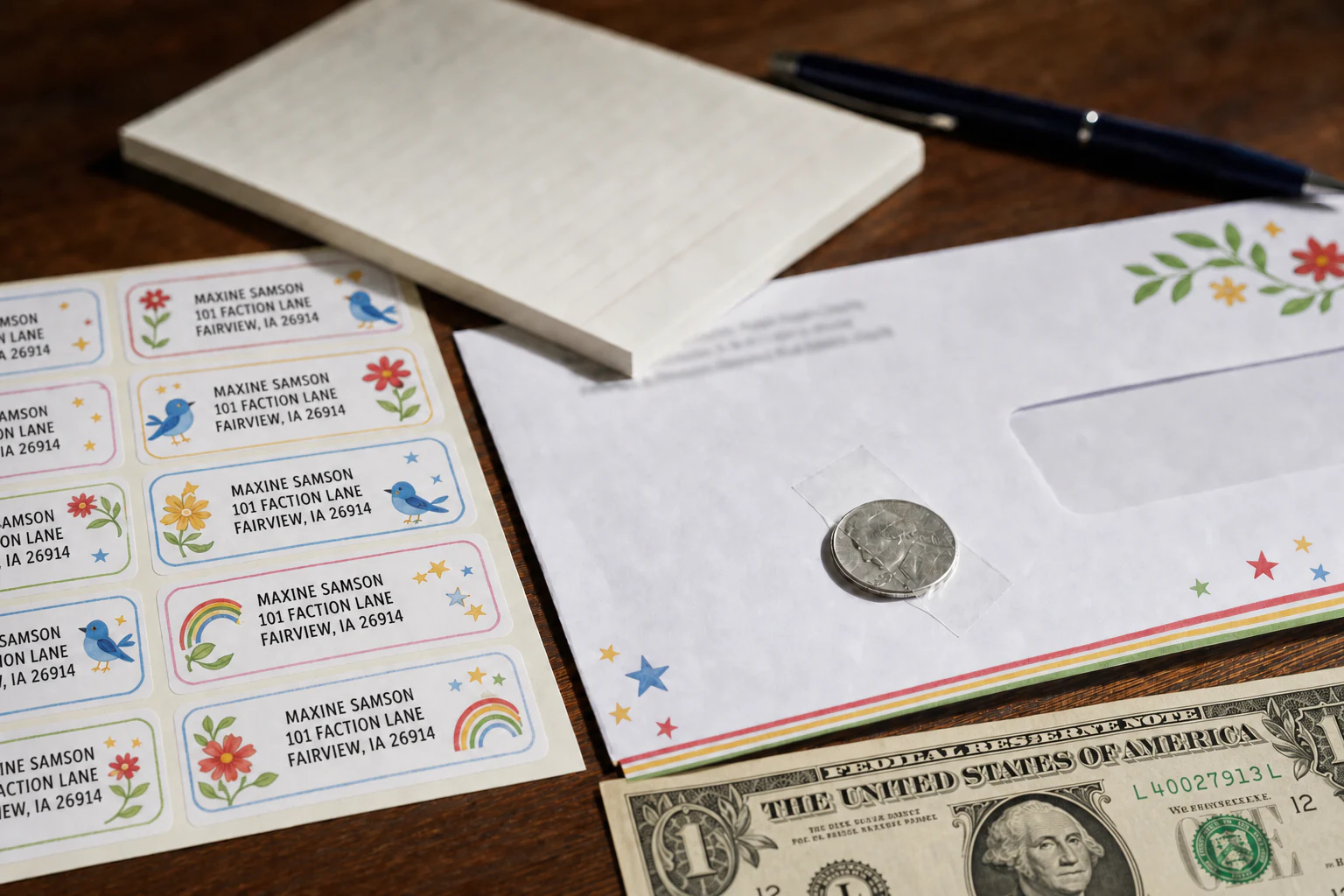
The "free gift."
The notepad, the labels, the nickel taped to the page — a small gift can make you feel you owe something back. That feeling of obligation is useful to the sender. You can notice it without turning it into a donation or a reply.
"You have been selected."
Your name in bold. A personal reference number. “You’ve been selected.” These details make a mass mailing feel like it was written just for you. They don’t improve your chances of winning — they improve the sender’s chances of getting a reply. (FTC, "Fake Prize, Sweepstakes, and Lottery Scams")
The heartbreaking picture.
A child’s face. An injured animal. These images can make saying no feel heartless. Even when the cause is real, the image is chosen to make you feel you must act. Choose the causes you want to support, instead of letting each letter choose for you.
The reply is the trap.
A sweepstakes entry, a “free gift” return, a small donation — each reply can mark your name as one that responds. Those names can be resold, bringing more mail and keeping the table full. Break the loop: stop answering unwanted solicitations and get off the lists. The less they send, the less you have to sort.
What you can take back
Make room for your own plans.
Less unwanted mail means fewer decisions you never asked to make. Think about what you'd like to do with that time and space.
A morning of your own.
Coffee without a stack of appeals waiting beside it. Time for a walk, a phone call, or something you've been putting off. You get to decide what comes first.
Giving on your terms.
Choose a few causes you care about and an amount that works for you. You can keep helping people without letting every new envelope reopen the decision.
For family and friends
If you're here because of someone you care about.
If you're worried about someone's mail, start by asking how they feel about it. Helping works better when you make the plan together.
Help without shaming.
Start with curiosity: “That's a lot of mail to keep up with. How do you feel about it?” Listen before offering solutions. Then suggest tackling it together: “Want to sit down with me and get some of this stopped?” Let them stay in control of what happens next.
Do it with, not for.
Where you can, sit down and do the opt-out steps together rather than taking over the mailbox. DMAchoice also has a dedicated Caretaker registration built for exactly this — managing someone else's mail preferences with their knowledge, not around it.
A gentle flag, not a diagnosis.
If difficulty stopping replies or discarding mail is new, especially alongside other changes in daily life, suggest discussing it with their doctor. Describe what you've noticed without assigning a label. The goal is to find support for whatever is making it hard to stop.
The mail can feel like company.
For someone living alone, a letter addressed to them can feel like someone is thinking of them. That feeling matters, even when the letter is a sales pitch. As the mail slows down, help replace that daily attention with regular calls, visits, or plans they can look forward to.
How to get off the lists
An afternoon plan. Print it and work through it.
You're not being wasteful or rude — you're reducing unwanted mail at the source. These five steps are free or low-cost, and you can start from your kitchen table. Some senders take longer to stop; keep the plan handy for follow-up requests.
Stop prescreened credit & insurance offers — free.
Call 1-888-5-OPTOUT (1-888-567-8688) or visit optoutprescreen.com. Opting out online or by phone lasts five years; a signed mail-in form makes it permanent. The service is run by the four credit bureaus: Equifax, Experian, TransUnion, and Innovis. It may ask for your Social Security number and date of birth to match your credit record, but providing them is optional.
Go to the service yourself. OptOutPrescreen doesn't initiate contact to sign you up. Don't give personal information to an unsolicited caller claiming to handle your opt-out.
Cut national marketing mail.
Register at dmachoice.org, run by the Association of National Advertisers. Registration costs$8 online or $9 by mail, lasts 10 years, and can take up to 90 daysto take effect. It covers participating marketers' prospect mail; contact organizations you've bought from or donated to directly using Step 5.Check current fees and coverage.
Helping someone else with their mail?
DMAchoice also offers a Caretaker registration for managing mail on someone else’s behalf with their knowledge, and a Deceased Do Not Contact list to reduce mail addressed to someone who has died.
Stop catalogs — free.
Sign up at catalogchoice.org, then select the catalogs you don't want and submit removal requests. Creating an account alone doesn't stop them.
Dispose of sensitive mail securely.
Keep bills, statements, and other records you need. When you're ready to discard mail containing personal or account information, shred it. Recycle the rest where accepted locally.
Ask individual senders to stop.
Use the organization's official website or privacy policy contact to ask it to stop sending promotional mail and sharing or renting your details. Include your name and address as printed on its mail. Contacting the sender directly is especially important if you've bought from it or donated before. Save yourself time and stamps. Before sending a solicitation back or putting a removal request in its reply envelope, check its official opt-out instructions. If you suspect a scam, don't reply; contact the real organization independently.
Also worth doing (beyond mail)
Do Not Call Registry — donotcall.govor 1-888-382-1222. It's free; call from the number you want to register. It reduces legal sales calls, but won't stop scammers or every type of call.
Start opt-outs yourself, using the addresses above. If an unsolicited caller asks for payment or sensitive information to “process” your removal, treat it as a scam. Hang up and check directly with the service.
Seeing a lot of aggressive or deceptive mail — not just the ordinary kind, but something that looks designed to trick someone? You can report it directly: reportfraud.ftc.gov (FTC) or uspis.gov/report-suspicious-mail (U.S. Postal Inspection Service).
If someone age 60 or older may have lost money to financial fraud, call the National Elder Fraud Hotlineat 1-833-372-8311 for help with next steps and reporting.
The daily discipline
Keep personal letters, bills, statements, and mail from organizations you deal with or government agencies for review. You don't have to open every unwanted solicitation. Leave it unopened, or discard it as soon as you recognize it. Shred personal or account information; recycle the rest where accepted. If you're unsure, check before discarding — an official-looking envelope isn't proof it's from the government.


Expect less unwanted mail, with results varying by sender. Allow up to 90 days for DMAchoice. These services won't stop every mailing: customer and donor mail needs direct requests, and unaddressed mail, political mail, or nonparticipating senders may still reach you.
You don't have to play their game.
The National Mail Awareness Project is an independent public-awareness project, not a government agency or an opt-out service. We are not affiliated with the U.S. government or the U.S. Postal Service. Resource details checked October 10, 2026; check providers for updates.